
the good news is… so good it catches us by surprise
READ
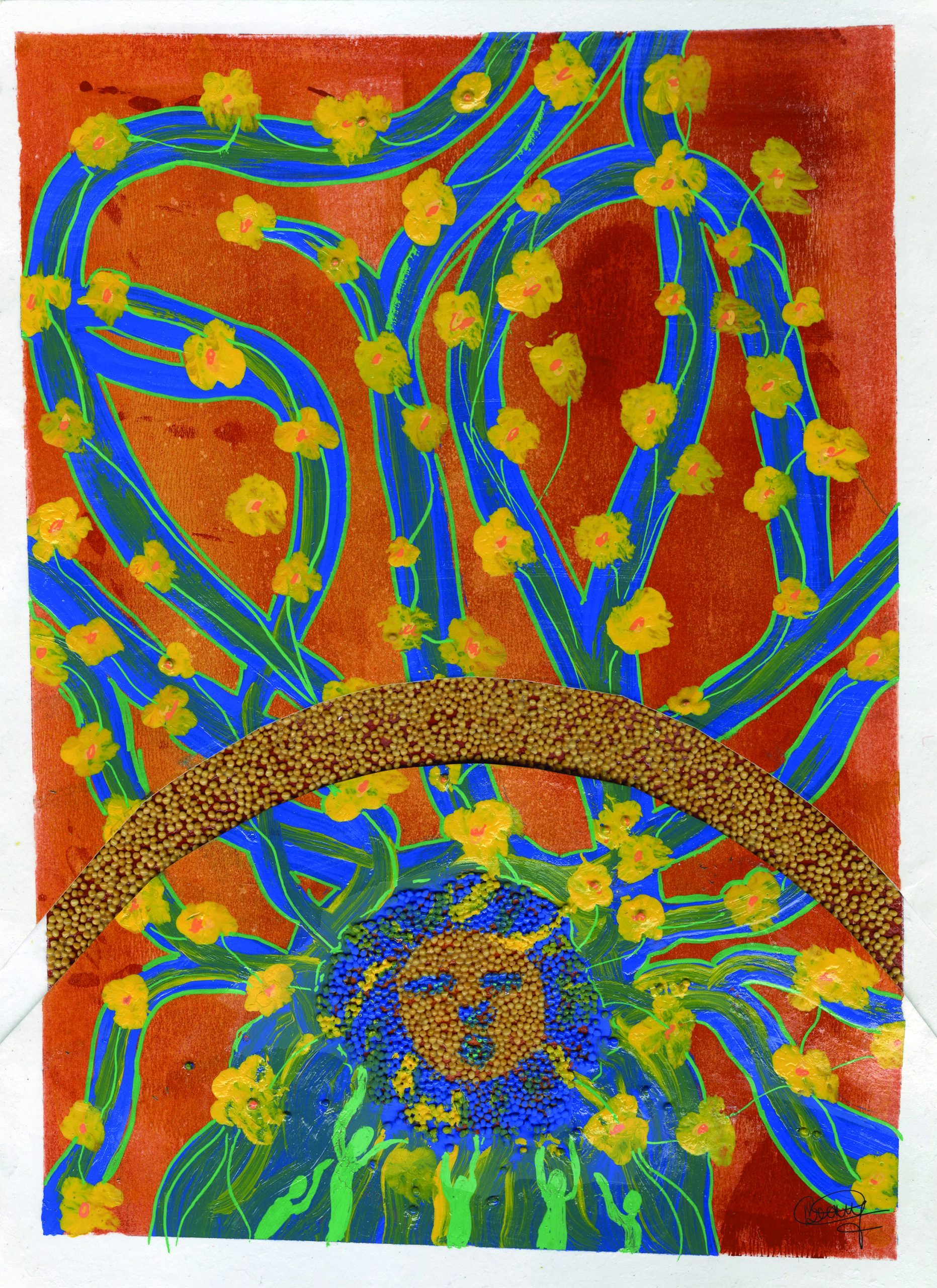
We Are Small, We Are Numerous, We Are Deep | Carmelle Beaugelin Caldwell
11″x14″ Acrylic, mustard seed on paper
ARTIST STATEMENT
Loose mustard seeds are nearly impossible to contain. They drift and scatter with the slightest breeze, asserting their own unruly will much like the mustard plants themselves. The mustard plant, dismissed as invasive weeds by some, is cultivated for healing and nourishment by others. Even now, after completing this piece, I am still finding stray seeds in my laundry, my car, my hair.
“They tried to bury us; they didn’t know we were seeds,” a line attributed to Greek poet Dinos Christianopoulos,6 has become a rallying cry for separated families along the Mexican-American border. More than a century earlier, Toussaint Louverture—the formerly enslaved commander of the self-emancipated army of Black cultivators in Saint-Domingue (colonial Haiti)—voiced a similar belief upon his deportation and imprisonment in France: “You have done no more than cut down the trunk of the tree of Black liberty. . . It will spring back from the roots, for they are numerous and deep.”
From the Corn Mother of Indigenous myth to African women braiding okra seeds into their hair as they were forced from their homelands, many of our ancestors understood the power of carrying life in its smallest form. Seed-carrying is an act of faith. These tiny, unassuming specks hold the audacious hope that wherever we go, we already have what we need to take root and flourish in strange and foreign soils. May our faith and our hopes be just as audacious, resilient, and uncontainable as the seeds which hold the fruits of our faith.
Written by Carmelle Beaugelin Caldwell
LOOK
Pay attention to the textures in the artwork. Notice everywhere you see mustard seeds.
6 Dinos Christianopoulos (1931-2020) wrote the couplet in 1978 (published in his book, The Body and the Wormwood) as a defiant statement against the Greek literary establishment, which had ostracized him due to his homosexuality.